

Understanding Religious Harm
Abuse, Theology, and Social Control
Religious harm looks different in every story — from interpersonal abuses to the unspoken dynamics that play out in the teachings and expectations of community.
Putting words to it is often the first step toward healing.
Types of Religious Harm
Learn about the common types of religious harm.
Explore In-Depth Articles Here
Abuse
Spiritual and religious abuse occurs when one person harms another within a religious or spiritual context. It often involves a power imbalance in which one individual holds religious authority. This authority may be based on interpretations of religious texts, a formal leadership role, or claims that God or a higher power is directing their actions. One widely recognized form of religious relational harm is sexual abuse. However, emotional abuse, financial exploitation, and spiritual manipulation can also occur in religious settings.
[Read more about religious abuse →]Theological Harms
Belief systems or doctrines that negatively shape how a person sees themselves and the world around them cause theological harm.
Shame-based ideology centers on the message, “You are not good.”Examples of shame-based teachings include the idea that a person is sinful, fundamentally flawed, untrustworthy, broken, or evil. These teachings can undermine a person's sense of self-worth. Purity culture often falls into this category because it is rooted in the belief that inherent sexuality or gender expression is something negative or dangerous.
Fear-based ideology centers on the message, “You are not safe.” Teachings about Satan, hell, divine punishment, or violent end-times scenarios often fall into this category. Fear-based “us versus them” beliefs may portray outsiders as dangerous, evil, or inferior. Members may be warned against interacting with outsiders, which can limit access to important information, resources, and social support.
[Read more about theological harm →]Social Control
Manipulative social dynamics can create a self-reinforcing system of psychological control within high-control groups. While participation may appear voluntary, members are often influenced by a complex web of internalized messages and pressures that make leaving or questioning difficult. High-control groups tend to emphasize obedience and conformity. They discourage doubt, warn against exposure to outside information, and instill fears about the consequences of departing from the group or its teachings.
These groups are often highly skilled at recruitment. The process may begin with messages about being chosen or special and appeal to a person's sincere desire to be good or to contribute to something meaningful. Individuals may be targeted during times when they are seeking social support, belonging, or moral direction. Recruitment frequently culminates in a high-stakes public commitment that encourages an “all-in”lifestyle and identity shift. Over time, ongoing pressure to suppress individuality and adopt group identity can erode a person's autonomy and self-trust.
[Read more about social control →]Religious Trauma: The Impact of Religious Harm
Religious trauma is the impact of religious harm on a person's thinking, emotions, and relationship with themselves. It references the psychological wounds that are left behind. Examples include a strong inner critic, intense sensitivity to shame, self-doubt, phobias about divine punishment, and other implications.
[Read more about religious trauma →]Unraveling Help from Harm
Religion can simultaneously bring emotional regulation, attachment security, meaning, and belonging — and also deep wounding. This complexity can cause confusion, self-blame, gaslighting, and isolation. It can be very challenging to hold the nuance of both good and bad at the same time.

Mental Health & Emotional Regulation
Religion often doubles as a mental-health toolkit. Worship can release endorphins and create a calming physiological response. Sermons offer reflective space for contemplation and reframing stress. Prayer gives structure for processing emotions and seeking comfort. Many religious teachings also offer practical guidance for relationships, parenting, forgiveness, and conflict — a roadmap for everyday life.
Attachment Needs
God can function as an attachment figure who offers safety, unconditional love, guidance, and a secure base to return to when life feels frightening. Many people experience God as someone who sees them, understands them, and provides emotional protection. Community and spiritual leaders often function similarly as powerful attachment bonds.

Meaning-Making & Identity
Faith systems give people a framework for understanding life's big questions — “Why are we here?” and “What happens when we die?” These belief structures function like an internal compass — providing comfort, coherence, and direction during uncertainty. Religion also shapes identity, defining roles and shared narratives about purpose.

Community & Belonging
Religion offers built-in community— a foundational human need. Community offers connection, support, and reduces isolation. It is a safety net for life's hard moments and a place to mark its milestones. Religion creates predictable rhythms of gathering and the organizational tools to coordinate large groups of people.
If you are deconstructing or changing your mind about religious beliefs, unraveling the good things you got out of religion might mean losing connection to many — if not most — of your basic needs.
This is why healing from religious harm is not about simply “letting go” or “moving on” — it is about rebuilding safety, meaning, and trust at multiple levels.
Religious Harm and Vulnerable Populations
While anyone can experience religious harm, certain populations face higher risk due to power imbalances, dependency, or systemic inequality within religious structures.
Children are particularly vulnerable in high-control religious settings, where cognitive development, autonomy, and consent are limited. Children depend on caregivers for safety and learning — which adds layers of complexity when those caregivers are also part of the system. Adults born into high-control groups often face additional challenges in healing because of the impact during formative years.
LGBTQIA+ individuals encounter heightened harm in non-affirming religious settings compared to their heterosexual and cisgender peers. Shame-based ideology and policies that selectively target this community can lead to significant psychological and emotional distress.
Womenface heightened vulnerability within patriarchal religious communities. The effects can be deeply damaging — eroding a woman's sense of autonomy, self-worth, and personal agency. Strict gender roles that restrict education and career can stifle growth, independence, and economic security. Women are often more susceptible to abuse in religious settings where sexuality is partitioned behind shame and secrecy.
Racial minorities face exploitation, harmful theology, and racism disguised as religious teaching — sometimes baked into the historical foundations of religious communities. The picture gets especially complicated where religion has also offered minority groups a narrative of strength and resilience in the face of collective racial trauma. Pulling apart what was harmful from what was helpful is part of the work.
Why Therapy Helps with Religious Harm
Religious harm shapes how you see yourself, others, and the world. Therapy creates space to untangle what happened and rebuild what was lost.
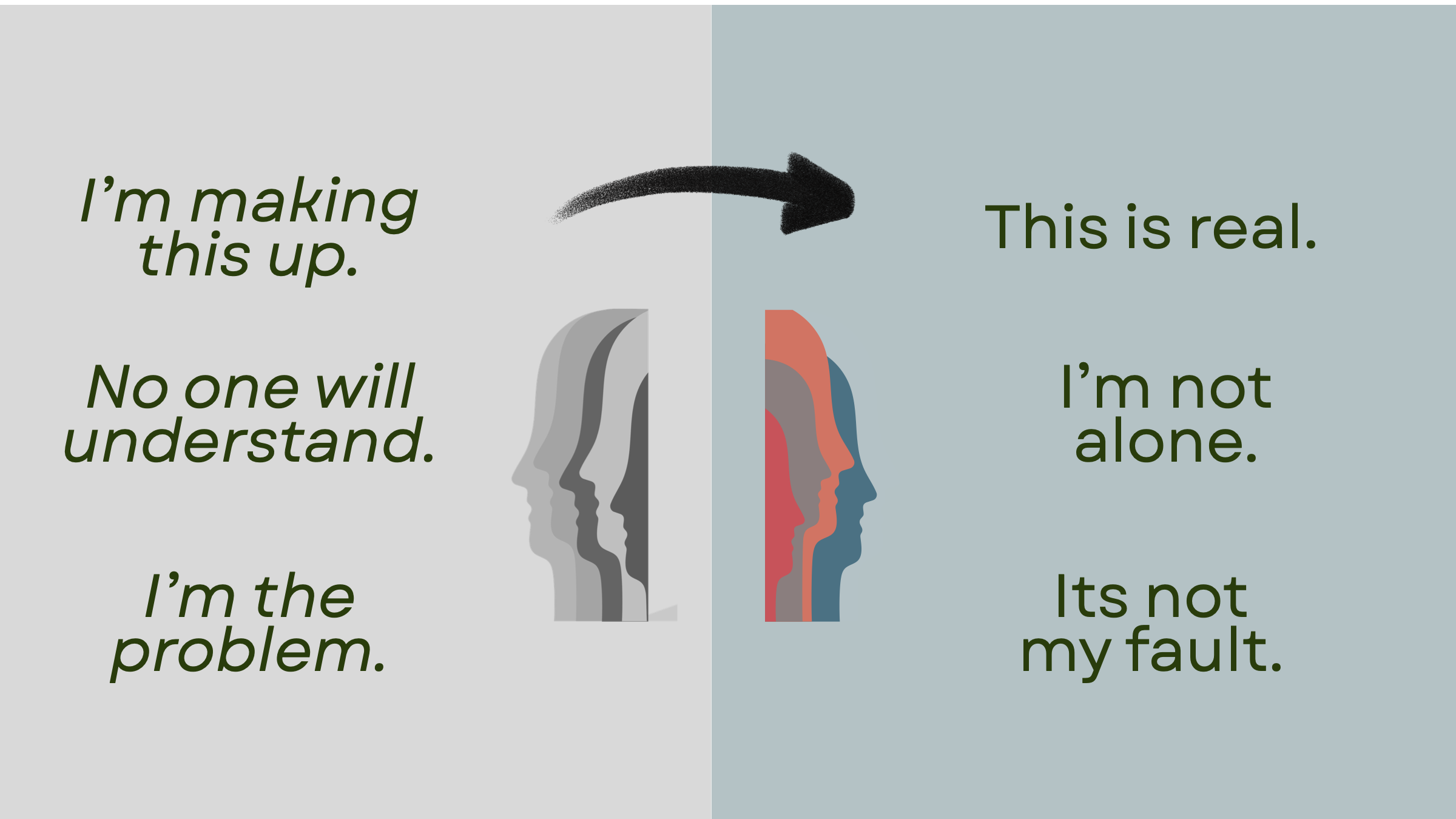
Naming what was hidden
Religious communities often shield religion from criticism. Therapy creates space where you can speak about what happened without minimizing it — and a witness who knows how to listen.
You deserve to be believed
A therapist who understands religious dynamics can help you trust your own perception again — without you having to prove your experience was “bad enough.”
Untangling help from harm
Religion can simultaneously give and take. Therapy creates space to honor what was meaningful while still naming what was harmful — without rushing you toward any particular conclusion about your faith.
Healing happens at many levels
Religious harm affects thinking, identity, body, and relationships. Therapy can address symptoms while you also rebuild safety, meaning, and trust at the levels they were affected.
Common Questions
Can a religion be both helpful and harmful?
Is questioning my faith the same as religious harm?
What if I'm not sure whether what happened to me 'counts' as religious harm?
Talk it through.
A free 15-minute consultation is the simplest way to start untangling your own story.
Therapy consultations for TN · SC · FL residents · No commitment · Confidential